

Why lighting should be designed as an infrastructure
For many years, lighting has been considered a purely technical item: a necessary system, to be properly designed and then forgotten. Today, this approach is no longer sufficient. Light can — and must — do much more.
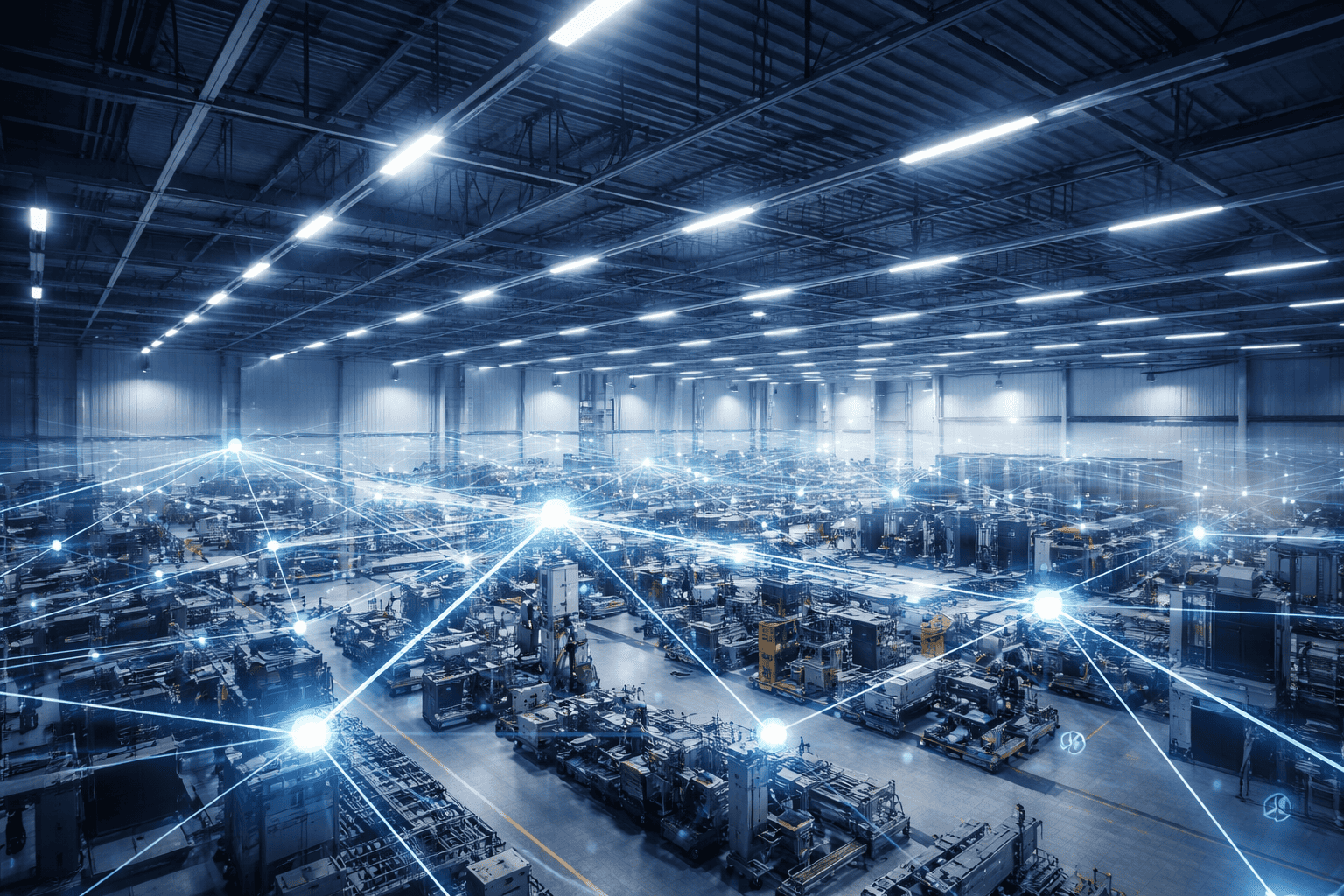
In recent years, companies have learned to think in terms of infrastructure: IT networks, control systems, management platforms, data. Lighting, however, has often been left out of this reasoning, treated as a static and isolated system, unchanged over time. And yet, it is one of the most widespread networks within any building, present everywhere and supplied and distributed in a truly capillary way.
In 2026, talking about lighting means talking about an intelligent infrastructure. One that does not merely produce light, but becomes an active part of space organisation, energy control and operational management. A system that is not designed to be “finished and forgotten”, but to evolve over time.
The difference lies not only in LED technology, which is now fully established, but in the system’s ability to adapt. In companies, schedules change, departments evolve, spaces are reconfigured and operational needs become increasingly dynamic. A modern lighting infrastructure must be able to follow these changes without requiring invasive interventions or new structural investments every few years.
This is where lighting stops being a cost and becomes an asset. An asset because it generates continuous energy savings, improves visual comfort and safety, and above all creates the foundations for collecting information, optimising space usage and managing the system in a conscious and informed way.
In 2026, the most advanced companies no longer ask only “how much energy do we save?”, but “how much control do we gain?”. Control over actual consumption, unnecessary switching-on and underused areas enables better decision-making, far beyond the lighting domain alone.
Rethinking light as an infrastructure means adopting a new perspective: from a one-off project to a system that supports the company over time. It is a cultural choice even before a technological one — and it is a choice that marks the difference between those who merely adapt and those who build lasting value.


 Read the article