
Have we lit too much? The value of darkness in cities
For a long time, we have associated light with safety, liveability and progress. Today, however, it is important to ask where lighting is truly needed and where, instead, it would be beneficial to leave room for darkness.
When the sun goes down, the city does not shut down: it transforms. Streets remain busy, shops stay open, public transport continues to operate, some people start their work shifts while others are heading home.
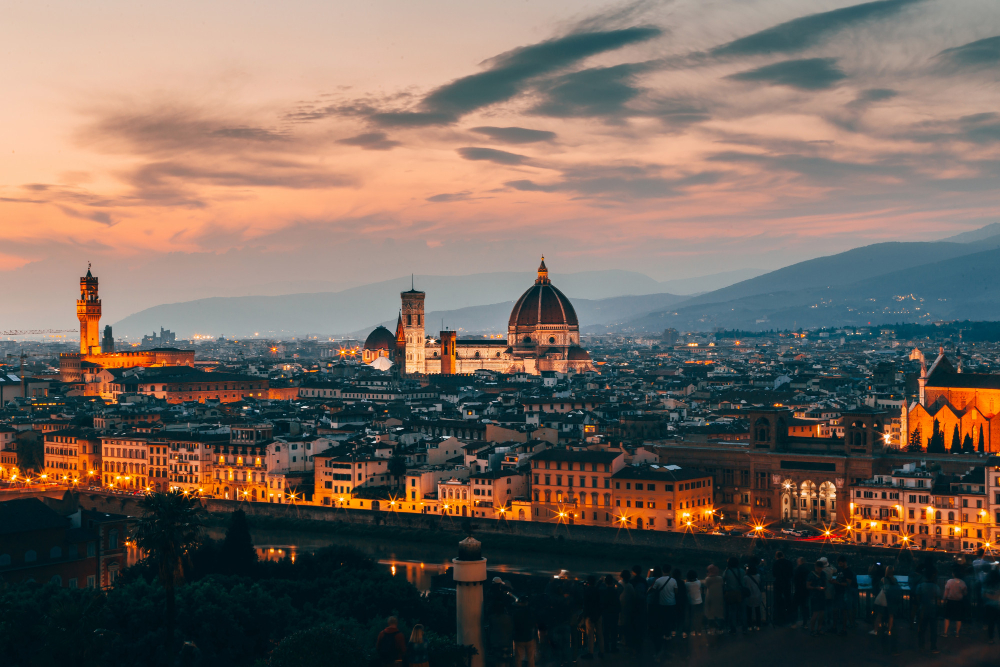
To make all this possible, we have progressively expanded the presence of artificial light in urban spaces. Streets, squares, car parks, buildings, shop windows and signs: today's night-time environment is far less dark than it was a few decades ago.
But more light does not necessarily mean better lighting.
Not all light is useful
For a long time, urban lighting was approached mainly in quantitative terms, with the aim of ensuring a certain level of illuminance, providing visibility and avoiding excessively dark areas.
Today, the approach is becoming more sophisticated: we are asking where the light produced actually ends up, how long it remains on, at what intensity and for what purpose.
Darkness is not simply the absence of light
Night-time darkness plays a role in ecosystems, as many animal species regulate their activities according to the natural alternation between day and night. Insects, birds, bats and other organisms can be affected by the presence of artificial light during night-time hours.
For this reason, in recent years, outdoor lighting design has begun to pay greater attention to the relationship between infrastructure, the environment and the night sky.
The concept of darkness preservation, meaning the preservation of genuinely dark areas, is becoming part of the debate around urban design, alongside issues such as biodiversity, landscape and environmental quality.
A street does not always need the same amount of light
The same physical space can experience completely different conditions over the course of just a few hours.
Take an urban street. At 8 p.m., it may be used by pedestrians, cars and bicycles. At 2 a.m., traffic along the same stretch may be completely different.
Now consider a square. It may be crowded during an event, used as a passageway in the evening and almost deserted during the night.
At certain times, a specific amount of light may be required; at others, a different distribution may be more appropriate, while in some situations a reduced level may be sufficient. Some areas may require constant lighting, while others can be managed according to schedules, presence, events or specific conditions.
Control systems, sensors and remote management make it possible to change how lighting systems operate without having to physically intervene on every luminaire.
The city of the future could have more darkness, not less
The next evolution of urban lighting may therefore seem paradoxical at first: a technologically more advanced city could also be a city with more areas of darkness. Technology makes it possible to light with greater precision, moving beyond the “everything on” versus “everything off” approach and creating intermediate conditions: different lighting levels, scenarios, schedules, selective activation and management based on the actual use of the space.
 Sustainability

 Read the article